
Have you ever wondered why the toilets in airports or stadiums seem to clear everything with a single, aggressive “whoosh”? That engineered efficiency defines a power flush toilet, technically known as a pressure-assisted system. While standard gravity models simply drop water into the bowl—often struggling to move waste under modern water-saving mandates—a pressurized toilet uses compressed air to create a veritable water cannon.
Inside the tank, these units look different; rather than a pool of water, they house a sealed vessel that builds energy as it fills. When triggered, that trapped air releases instantly, blasting water through the rim with significantly more force than gravity alone provides. In practice, this high performance toilet design offers “one-flush” reliability that can finally let you retire the plunger for good.
Gravity vs. Pressure: Why Your Current Toilet Fails Where Power Flush Succeeds
Peek inside the tank of a standard toilet, and you’ll see standing water waiting to fall. A pressure-assisted model looks entirely different because it houses a sealed plastic container—often called a toilet pressure tank or vessel—inside the ceramic shell. Instead of loosely filling the reservoir, the water supply line feeds directly into this heavy-duty cartridge, trapping air inside as it fills.
Think of this mechanism like stretching a rubber band. As water enters the vessel, it squeezes the trapped air into a tighter and tighter space. The air naturally wants to expand back out, creating a massive amount of stored energy. When you finally push the flush lever, you aren’t just opening a drain; you are releasing that compressed air, which blasts the water into the bowl with significantly more force than gravity alone can provide.
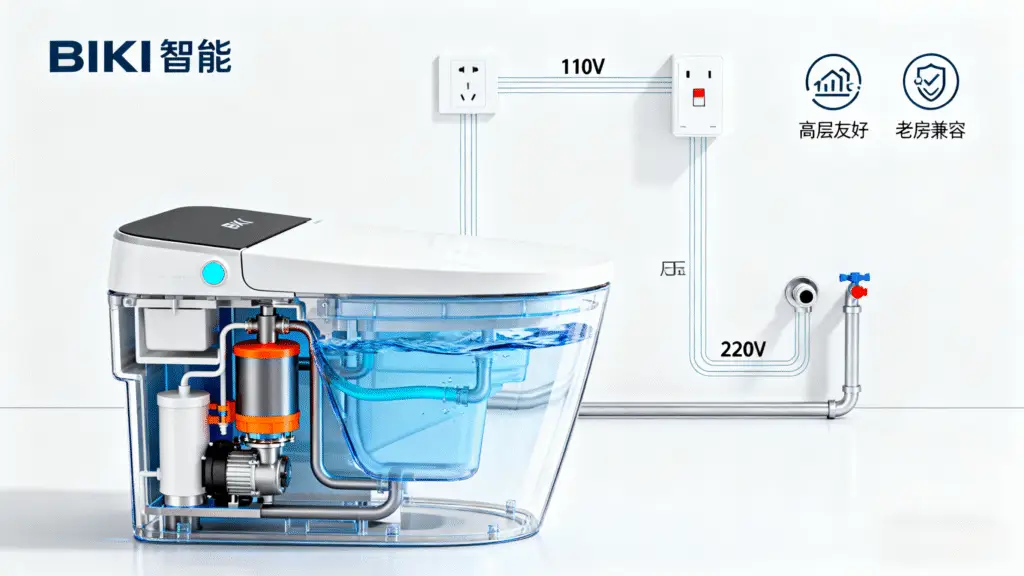
That explosive release creates a “push” rather than a “pull,” changing the physics of your flush entirely. While a gravity toilet relies on the weight of the water to lazily siphon waste away, a pressure-assisted system acts more like a jet engine. This shift in mechanics delivers three clear advantages:
- Water Velocity: The water moves fast enough to shred waste and scour the bowl, rather than just swirling over it.
- Tank Design: The internal sealed vessel prevents condensation (“sweating”) on the outside of the tank during humid months.
- Clog Prevention: The forced discharge pushes waste through the trapway instantly, preventing the slow buildup that causes most blockages.
More Power, Less Water: How Pressurized Tanks Save You From Clogs and High Bills
Many homeowners assume that conserving water means sacrificing performance, often leading to the dreaded “double flush” habit just to clear the bowl. Pressure-assisted toilets solve this paradox by substituting volume with speed. Because the air-charged vessel blasts water out at such high intensity, these units can operate effectively on just 1.1 or 1.28 gallons per flush (GPF) without leaving anything behind. You get the lower utility bills associated with water conservation and low GPF ratings without the daily anxiety of a weak, lazy swirl that fails to finish the job.
To verify this muscle before you buy, look beyond the brand name to the Maximum Performance (MaP) score. Independent testing labs use weighted paste to simulate waste, rating toilets on how many grams they can clear in a single attempt. While standard gravity toilets often struggle to clear 350 to 600 grams, a quality pressure-assisted unit consistently hits the maximum 1,000-gram mark. Checking the MaP scoring for toilet flushing efficiency provides an objective guarantee that the fixture can handle heavy demands before you install it.
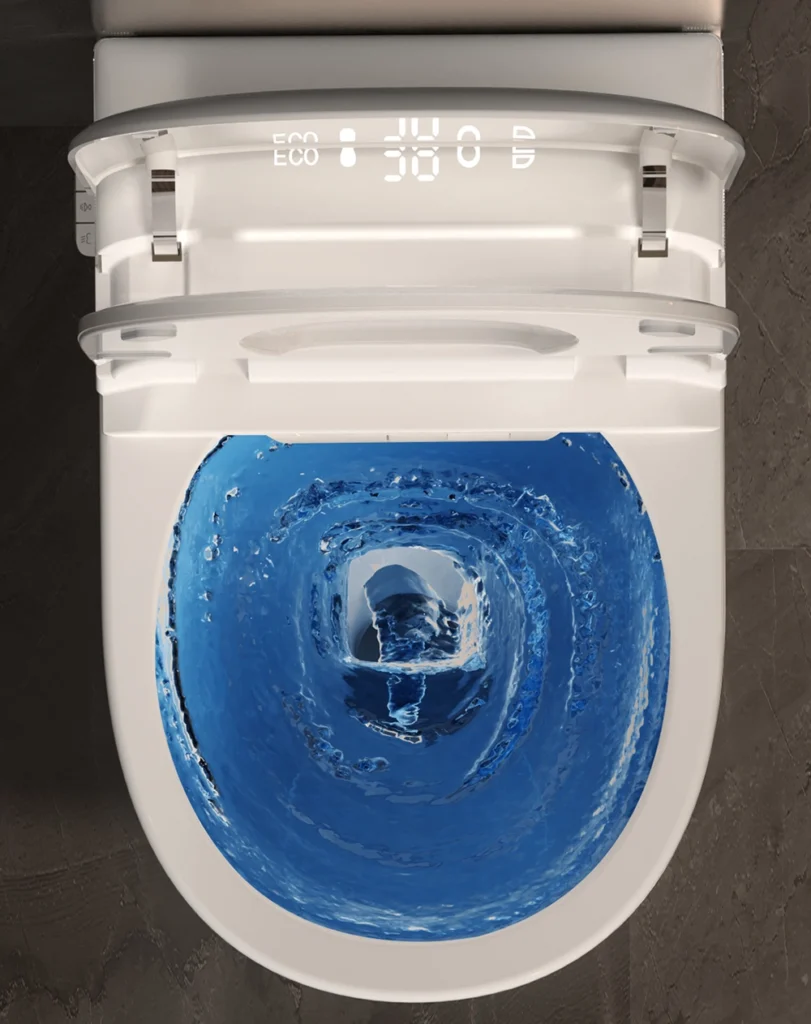
This raw power does more than just scour the ceramic; clearing waste with high-velocity water discharge essentially “power washes” your drain line with every use. For older homes with rough cast-iron pipes or long plumbing runs, this fast-moving slug of water carries solids all the way to the municipal sewer, preventing them from settling and forming clogs deep in your walls. However, harnessing this commercial-grade energy inside a residential bathroom introduces a sensory trade-off that surprises some first-time buyers.
The ‘Whoosh’ Factor: Balancing Commercial-Strength Performance with Bathroom Noise
That distinctive “whoosh” sound is the immediate price of admission for superior flushing power. Unlike the polite gurgle of a standard fixture, the comparison of pressure-assisted vs gravity-fed toilets reveals a stark auditory difference. The mechanism releases compressed air instantly, creating a sharp noise burst similar to what you hear in airport restrooms rather than the slow trickle of a traditional home tank.
Location matters significantly when bringing this commercial-grade technology into a residential floor plan. Because decibel levels of pressure-assisted models can spike 10 to 20 points higher than gravity units, installing one on a shared wall with a nursery or a light sleeper’s bedroom might cause disturbances. It is often smarter to prioritize these units for high-traffic guest baths or master suites where the noise is less intrusive.
Financial commitment is the final hurdle, as the initial cost of installing pressure-assisted units is notably higher. However, when weighed against the expense of emergency plumber visits or the frustration of constant plunging, many homeowners find the math works in their favor:
- Standard Gravity: ~50–60 dB (Conversation level) | $150–$300 average unit price
- Pressure-Assisted: ~80+ dB (Blender level) | $350–$600 average unit price
While the tank structure is durable, the unique internal components that justify this price eventually require specific care.
Maintaining Your ‘Water Cannon’: Replacing Cartridges and Troubleshooting Common Issues
Unlike standard gravity tanks where you can swap out a cheap rubber flapper, Flushmate system maintenance and repair requires components specifically designed to handle high pressure. The sealed vessel inside the porcelain acts like an engine, meaning you cannot use generic hardware store parts; you must match the serial number on the internal unit to safely source the correct replacement.
Replacing a pressurized toilet tank cartridge looks intimidating, but the actual work is surprisingly manageable for most homeowners. Once you shut off the water and flush to release air pressure, the central cartridge—which acts as the system’s brain—simply unscrews with pliers for a quick swap. This “plug-and-play” repair restores full power without requiring you to replace the entire fixture.
If you hear the unit cycling on its own, troubleshooting pressurized water tank clogs or leaks usually points to a worn cartridge seal rather than a pipe blockage. This “ghost flushing” noise signals that the vessel is losing pressure and trying to recharge. Recognizing these unique maintenance quirks helps ensure long-term reliability before you decide if this technology fits your home.
Is the Power Flush Upgrade Right for Your Home? A 3-Point Decision Guide
Upgrading to high performance bathroom fixtures isn’t just about raw power; it’s about matching the tool to your home’s infrastructure. While the characteristic “whoosh” is louder and the initial price tag higher, the freedom from recurring clogs often justifies the investment. Consider making the switch to the strongest flushing toilet available if you fit these criteria:
- Buy This If:
- Your home has older, sluggish plumbing (pre-1980s).
- You have a large household prone to frequent clogs.
- You want maximum water efficiency without sacrificing power.
You no longer have to accept the panic of rising water. By choosing commercial-strength flushing for residential use, you are effectively future-proofing your daily routine against the most annoying plumbing headaches. Whether you are planning a full renovation or a quick replacement, you now have the insight to banish the plunger for good and enjoy true one-flush reliability.
 English
 Português do Brasil
 Español de México
 Deutsch
 Français