
The global smart toilet industry is undergoing explosive growth, driven by rising health consciousness, smart home integration, and technological advancements. Here’s a comprehensive analysis of where the industry stands and where it’s heading.
1. Global Market Size & Growth Projection
- 2025 Estimate: The global smart toilet market is valued at $8.5-$9.1 billion, with the Asia-Pacific region (led by China, Japan, and South Korea) accounting for over 55% of the market share.
- 2030 Projection: The market is expected to surge to $13.7 billion+, with a CAGR (Compound Annual Growth Rate) of 8.5%-10.1%.
- China’s Market Dominance: China’s smart toilet market is projected to grow from ¥18.5-20 billion (2025) to ¥41.8-50 billion (2030), boasting a staggering CAGR of 16%-18%—far outpacing the global average.
2. Key Growth Drivers
a. Health & Hygiene Awareness (Post-Pandemic Boost)
Consumers now prioritize contactless, hygienic solutions. Smart toilets’ features like UV sterilization (99.99% bacteria elimination), antibacterial glazes, and self-cleaning nozzles align perfectly with this demand.
b. Smart Home Ecosystem Integration
- In 2025, 65% of smart toilets are IoT-enabled, allowing integration with voice assistants (Alexa, Google Home) and health-tracking apps.
- Brands like BIKI are pioneering AI-driven models that learn user preferences (e.g., water temperature, seat heat) for personalized experiences.
c. Policy & Cost Reductions
- Government subsidies (e.g., China’s appliance upgrade programs) and component localization (reducing costs by 30% since 2020) have made smart toilets more accessible.
3. Technological Innovations Shaping the Industry
a. AI-Enabled Health Monitoring
Smart toilets are evolving into “health hubs”:
- Urine Analysis: Top-tier models (e.g., BIKI’s premium series) detect 14+ health markers (e.g., glucose, protein) and generate wellness reports.
- Predictive Maintenance: Sensors alert users to potential issues (e.g., clogged nozzles) before they escalate.
b. Efficiency & Sustainability
- Instant Heating Tech: 68% of 2025 models use tankless, instant-heat systems—saving 35% energy vs. traditional tank designs.
- Water-Saving Flushes: Dual-flush systems (≤4L per flush) meet global eco-standards, appealing to environmentally conscious markets like Europe.
c. Material & Design Breakthroughs
- Bio-Degradable Plastics: Usage has risen from 28% (2023) to 40% (2025), reducing electronic waste.
- Modular Designs: Repair costs are cut by 60%, as only faulty modules (not entire units) need replacement.
4. Regional Market Dynamics
a. Asia-Pacific: The Growth Powerhouse
- China: Penetration is still low (≈10%), but urbanization and e-commerce (Alibaba, JD.com) are driving adoption. Mid-tier models (¥1,800-¥2,500) dominate.
- Japan/South Korea: Mature markets with 40%+ penetration; demand is now focused on premium, feature-rich models.
b. Europe: Regulatory & Eco-Focused
- Strict water-efficiency laws (e.g., EU’s EcoDesign Directive) favor models with 3-4L flushes and energy-saving modes.
- BIKI’s CE, Water Mark, and SASO-certified models are well-suited for European distributors.
c. North America: Slow But Steady
- Penetration is <15%, but demand for smart home-compatible and ADA-compliant models is rising. BIKI’s CUPC-certified products meet U.S. plumbing codes.
5. Challenges & Opportunities
a. Key Challenges
- Reliability Concerns: 5%-8% of smart toilets face malfunctions (e.g., faulty sensors, leaks), eroding consumer trust.
- Price Sensitivity: High-end models ($800+) limit mass adoption in emerging markets.
b. Opportunities for Brands Like BIKI
- Market Segmentation: Offer a product matrix:
- Premium: AI health-monitoring, UV sterilization (for Europe/North America).
- Mid-Tier: Balanced features + affordability (for China’s tier-2/3 cities).
- Entry-Level: Core functions (heating, washing) at <$500 (for price-sensitive regions).
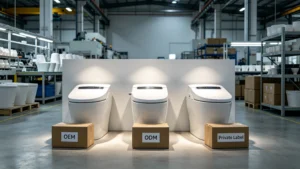
- Service Differentiation: BIKI’s 24/7 support, global warranty, and OEM/ODM capabilities address pain points for importers and distributors.
6. Future Outlook (2025-2030)
- Market Penetration: China’s smart toilet penetration will hit 25%+ by 2030, with the global market reaching $28.4 billion by 2034.
- Tech Evolution: AI will deepen integration with telehealth platforms, while hydrogen water cleaning and self-disinfecting glazes become mainstream.
- Competitive Landscape: Domestic brands (like BIKI) will gain share in Asia, while international players (TOTO, Kohler) defend premium segments in Europe/North America.
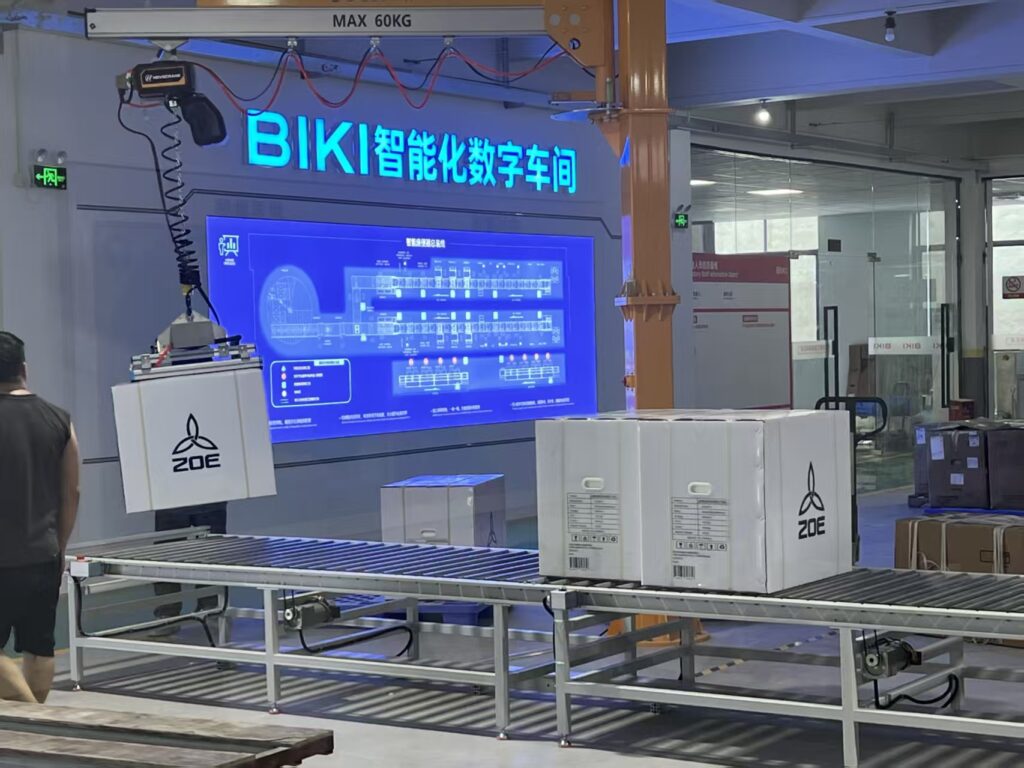
For BIKI, these trends highlight a clear path: Leverage your 10+ years of expertise, 3 automated factories, and 30,000+ monthly production capacity to deliver tailored solutions for every market. Prioritize R&D in AI health tech and eco-friendly materials, and double down on after-sales support—this is how you lead in the smart toilet revolution.

 English
 Português do Brasil
 Español de México
 Deutsch
 Français